This post may contain affiliate links. As an Amazon Associate I earn from qualifying purchases. Learn more.
A small bedroom can feel like a retreat instead of a storage closet with a bed in it. You don’t need more square footage to get there. The trick is soft layers, warm light and clear floors and surfaces, so the room feels calm the moment you walk in.
Pick a calm color palette
Stick to two or three soft colors, like linen, oat and sage, and repeat them across bedding, curtains and a rug. A tight palette keeps the room from feeling busy, which matters more in a small space where you can see everything at once. If your walls are a color you can’t change, pull your palette from them instead of working against them.
Layer the bed
The bed is the biggest thing in the room, so it sets the mood. Start with breathable sheets, add a duvet or quilt, and finish with a throw at the foot of the bed and two to four pillows. Textured fabrics like linen, waffle weave and chunky knit add coziness without adding clutter. Keep the pillow count reasonable so making the bed each morning stays quick.
Switch to warm, low light
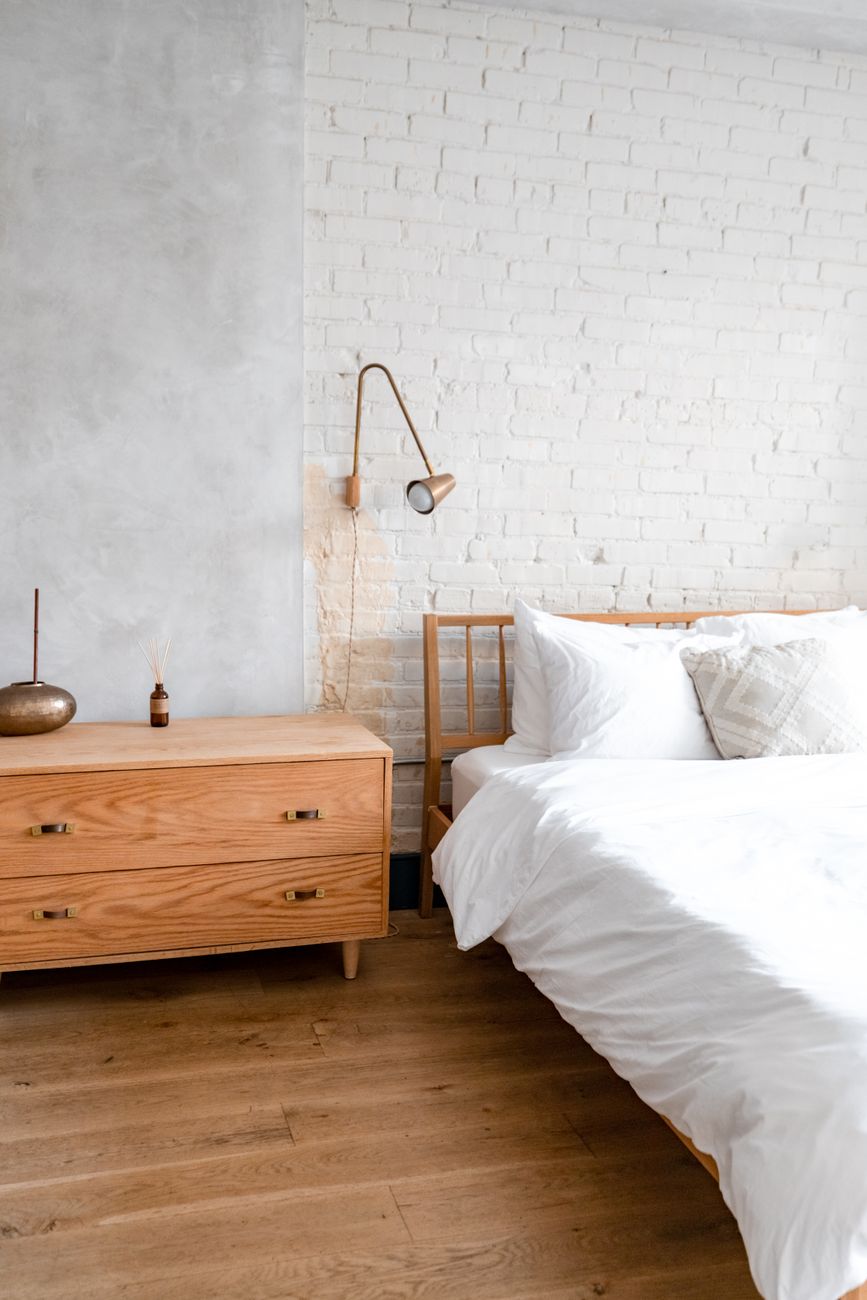
Overhead lights tend to feel harsh at night. A bedside lamp with a warm bulb, a plug-in wall sconce or a small strand of warm lights makes the room feel soft and calm. Plug-in sconces are a good fit for renters, since they hang from a single hook and use an outlet instead of new wiring. Check your lease before putting anything into the wall.
Use the space under the bed
Under-bed bins or zip bags hold off-season clothes, extra bedding and shoes, so the closet and dresser have room to breathe. If your bed sits too low, bed risers can lift it a few inches. A bed skirt or a duvet that hangs a little longer hides the bins from view.
Edit the furniture
Small rooms feel cramped when there’s one piece too many. Walk the room and ask what each piece of furniture is really doing. A dresser that doubles as a nightstand, a bench at the foot of the bed with storage inside, or a slim chest instead of a wide one can free up a surprising amount of floor. Aim for a clear path around the bed, even if it’s narrow. Open floor reads as calm.
Keep surfaces simple
Give each nightstand a lamp, a book and one small tray for the things that tend to pile up, like a phone, lip balm and a glass of water. A wall shelf can stand in for a nightstand when floor space is tight. The fewer things sitting out, the calmer the room feels.
Soften the floor and windows
A rug that reaches past the sides of the bed gives your feet somewhere warm to land in the morning. Curtains hung higher and wider than the window frame make the window look larger and let in more daylight. If you can’t drill, tension rods or adhesive hooks can hold lightweight curtains; test adhesive strips somewhere hidden first.
Make room to wind down
If there’s space, add one small comfort spot: a floor cushion by the window, a small chair with a throw, or a basket of books by the bed. Keep work, laundry and screens out of the room as much as you can, so the space stays tied to rest.
Keep it calm
Do a quick reset each night: clear the nightstand, put clothes away and straighten the bed. It only takes a few minutes, and the room feels ready when you come back to it.
Save this to Pinterest for later.
Save this for later


Leave a Reply